Most releases are mastered at a high sample rate and delivered at a lower one. CD and most streaming deliveries want 44.1 kHz; video wants 48. The conversion is the last thing that happens to a master before it leaves, so it had better not leave a mark.
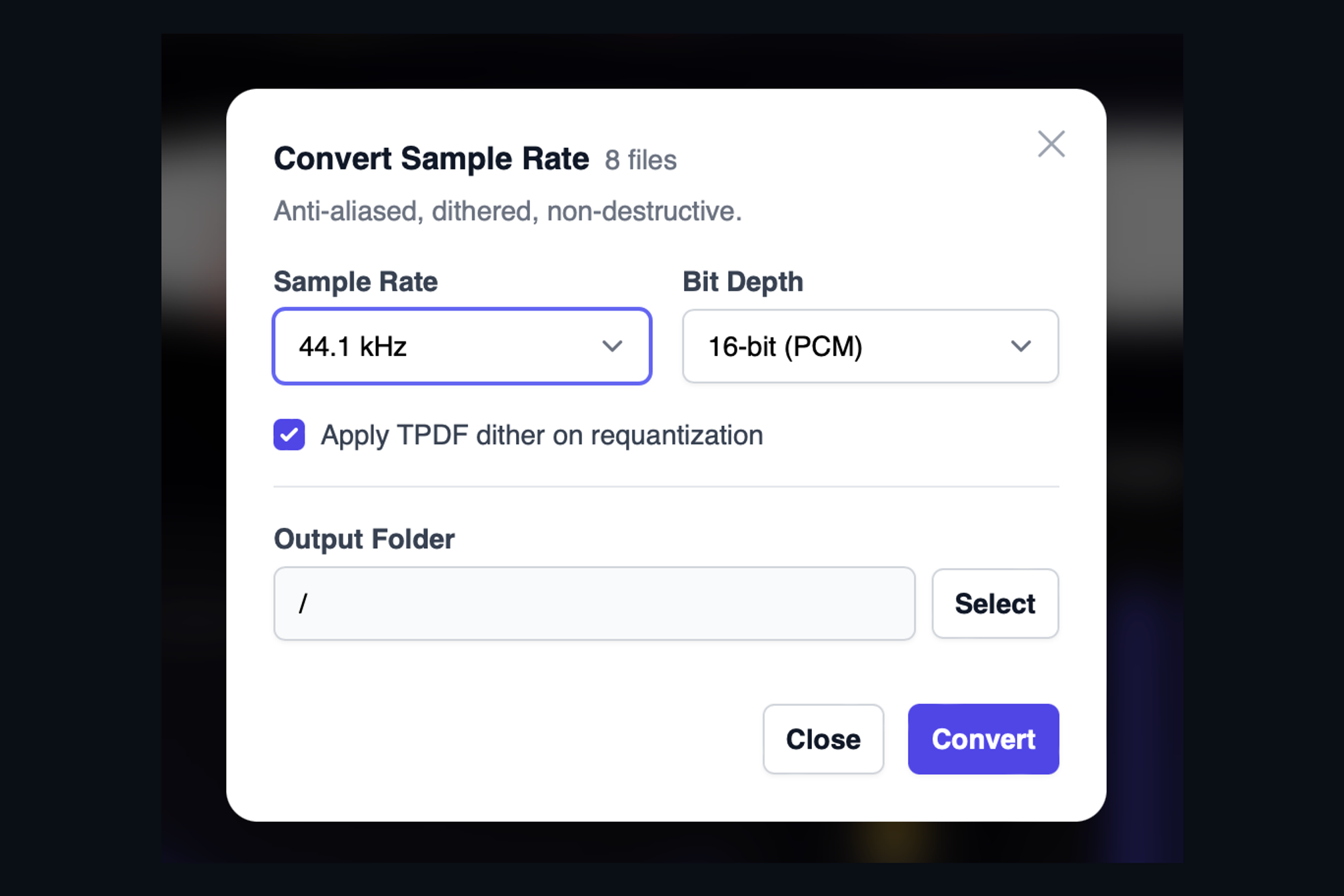
AMIE's Convert Sample Rate dialog handles a whole album at once. Pick 44.1, 48, 88.2 or 96 kHz, choose 16-bit or 24-bit PCM or 32-bit float, and decide whether to apply dither when the bit depth goes down. The converted files are written to a new folder beside the originals, which are never touched. A quiet safety check also keeps the converted peaks just under full scale, because a conversion can nudge a very hot master over the line.
What can go wrong in a conversion
When you lower the sample rate, the file can no longer hold the very highest frequencies. A good converter removes them cleanly. A careless one lets them fold back down into the audible range as ghost tones that were never in the music. The effect is called aliasing, and it sounds like a faint, glassy haze on cymbals and vocals that you cannot EQ away afterwards, because it is now part of the signal.
How we know AMIE's conversion is clean
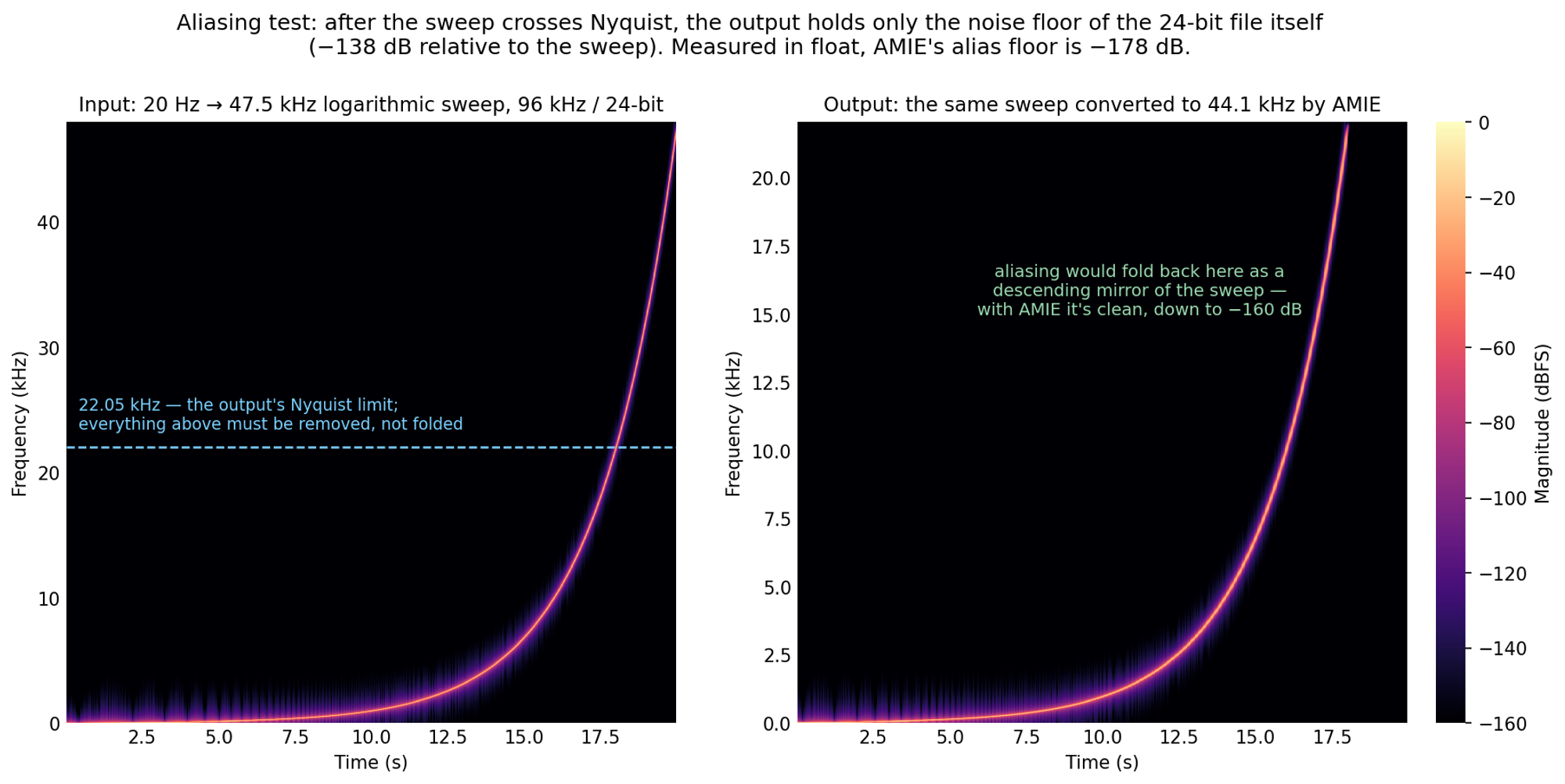
We tested it the way converters are tested in the lab: with a tone that sweeps from deep bass up past the limit of hearing, at 96 kHz, converted to 44.1 kHz. In the picture below, the left panel is the original sweep. The right panel is AMIE's output. Where a careless converter would leave a mirror-image ghost of the sweep descending through the audible range, AMIE's output shows one clean line and black silence.
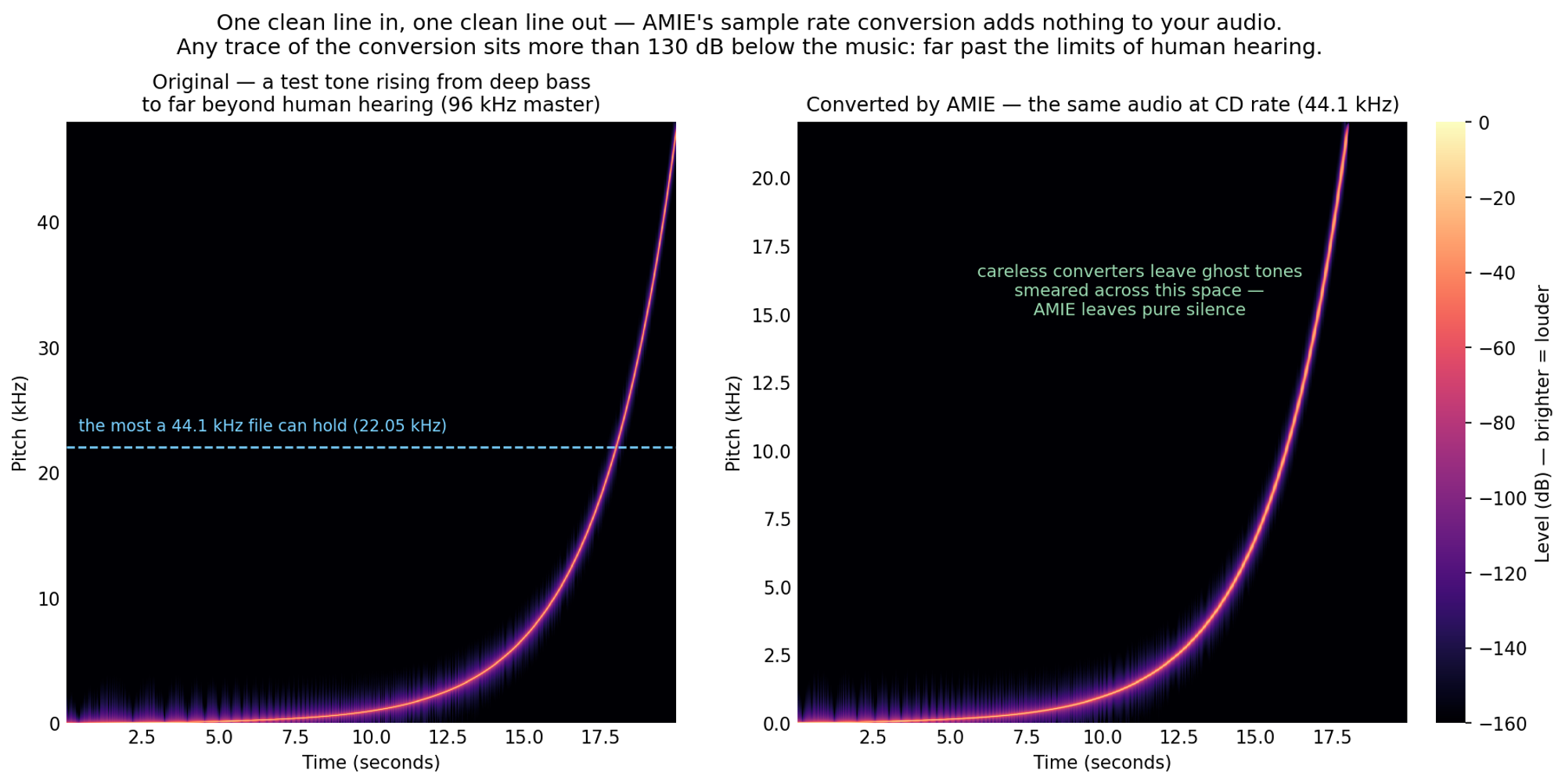
Any trace of the conversion sits more than 130 decibels below the music, far past what any listener or any playback system can resolve. The same measurement runs as an automated test every time AMIE is built, so the result in the chart is not a one-off.
Convert with confidence, deliver at the rate the release needs, and keep the high-rate master for the archive.
Keep reading
This post is part of a series that walks through everything AMIE does. See the whole list on the AMIE product page, or see plans and pricing.
- Next in the series: ISRC embedding that every system can read
- Previous: Clean "(fixed)" copies, written next to your original